Symphysitis most often appears during pregnancy under the influence of hormones that prepare a woman's body for childbirth. The mobility of the joint leads to pain in the pelvic area, which appears even with any movement. There are many ways to help reduce the intensity of the pain. In most cases, symphysitis goes away on its own after childbirth.
Why symphysitis develops
During pregnancy, the hormonal balance changes. Hormones responsible for maintaining the pregnancy and for carrying the baby successfully are produced. The hormone relaxin softens the ligaments. This helps the baby pass through the birth canal more easily. Symphysitis most often appears in the third trimester of pregnancy, and rarely earlier, at around 22-24 weeks of pregnancy.
When the first symptoms of symphysitis appear, you should see the doctor who is monitoring your pregnancy. This is necessary to rule out conditions that are dangerous for the mother and the baby, such as urinary tract infections or inflammation of the pelvic organs.
Aggravating factors
Besides hormone production, there are several factors that provoke stretching of the pubic ligaments:
- disorders of calcium and phosphorus metabolism;
- vitamin D deficiency;
- increased body mass index
- three or more previous pregnancies;
- injuries to the pelvic bones, even old ones;
- hereditary diseases of the musculoskeletal system;
- large fetal weight (estimated weight of the baby at birth of 4 kg or more);
- insufficient physical activity of the mother.
Signs of symphysitis
The main manifestations of symphysitis during pregnancy are:
- sharp, shooting pain in the pelvic area;
- aching pain in the lower back radiating to the abdomen and the inner thigh;
- sharp pain when lifting a leg, shifting weight from one leg to the other, or spreading the legs;
- pain with the slightest physical exertion, even when walking;
- a distinct clicking in the pubic area when making sudden movements;
- pain in the area of the pubic joint during sexual intercourse;
- marked tiredness and fatigue.
The level of pain with symphysitis during pregnancy can range from mild, almost unnoticeable, to very severe. The pain becomes much stronger in the following situations:
- when lifting objects;
- during physical activity that actively involves the hips;
- when staying in one static position for a long time without changing posture.
Degrees of severity.
Modern medicine distinguishes three degrees of the condition
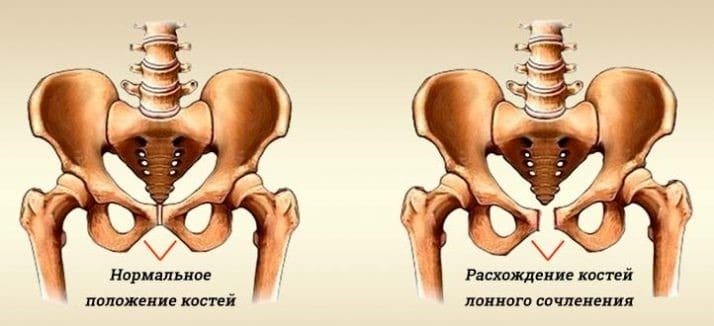
- Grade 1 — the gap between the bones of the pubic joint is 5-9 mm. The condition is tolerated fairly easily; the pregnant woman is bothered by minor pain that appears during long walks or physical activity;
- Grade 2 — the gap between the bones of the pubic joint is 10-19 mm. Pain appears with any intense movement;
- Grade 3 — the gap between the bones of the pubic joint is 2 centimeters or more. Pain appears even at rest.
How to reduce the intensity of the pain.
After confirming the diagnosis, the doctor managing the pregnancy should give some advice and recommendations that will help reduce the level of pain.
- using a special support belt;
- taking preparations containing calcium and vitamin D;
- monitoring weekly weight gain and controlling weight in case of excessive gain, since extra weight increases the pain;
- keeping a regular sleep and rest schedule; in some cases complete physical rest should be maintained;
- applying a warm heating pad to the ligament area (the doctor must explain the importance of following safe heat application rules);
- light massage at home;
- using a special orthopedic cushion for the pelvic area;
- swimming in a pool (if the doctor sees no contraindications).
In some cases, painkillers may be taken. They are prescribed by a doctor. Taking medications on your own during pregnancy without consulting a specialist is prohibited.
Treatment of symphysitis.
There is no specific treatment for symphysitis during pregnancy. Almost always this condition goes away on its own 30-45 days after childbirth. To relieve the condition, the doctor may prescribe massage, a set of therapeutic exercises, special orthopedic cushions, and reduced physical activity.
What to avoid with symphysitis
With this condition, you should avoid:
- sitting with one leg crossed over the other, since the ligaments take a diagonal position and are stretched even more;
- staying in the same position for a long time — sitting or lying;
- walks lasting more than 60 minutes (at a slow pace);
- climbing stairs;
- walking with long strides.
According to statistics, 70% of pregnant women experience symphysitis. This condition requires minor correction but does not require specific treatment. 1-2 months after childbirth, once the hormonal balance is restored, symphysitis goes away on its own.
All materials presented on the site are intended solely for educational purposes and are not intended for medical consultation, diagnosis or treatment. The site administration, editors and authors of the articles are not responsible for any consequences or losses that may arise from the use of the site materials.
Factors contributing to symphysiopathy.
The main factor provoking this condition is a lack of calcium and vitamin D, which are involved in the formation of cartilage and bone tissue. Other causes of abnormal widening of the pelvic bones are:
- Excessive physical exertion during pregnancy — lifting heavy objects, sudden movements, running fast, etc.;
- Infectious diseases of the urinary and genital organs (cystitis, urethritis, etc.);
- Autoimmune conditions accompanied by damage to joints and ligaments;
- Hormonal disorders accompanied by impaired supply of micro- and macroelements to cartilage tissue.
These causes can lead to symphysiopathy either individually or in combination. An important task of the attending doctor is to identify risk factors and eliminate them in time or reduce their effect on the body.
What to do when the pelvic bones separate during pregnancy?
Mild pain or discomfort in the area of the pubic joint is normal and is not considered by professional doctors to be a situation requiring urgent medical intervention. However, in abnormal symphysiopathy, the following measures are indicated to reduce pain and preserve the integrity of the pubic joint:
- Wearing a support belt that partially relieves the load on the pelvic bones;
- Limiting physical activity, which is advised when pain of any kind appears;
- Limiting mobility, including long walks; women are also advised to lie down or recline;
- In severe cases accompanied by severe pain and a risk of rupture of the symphysis, strict bed rest may be prescribed;
- Taking vitamin complexes containing calcium, magnesium, zinc, manganese, vitamin D and other components necessary for the formation of strong and elastic connective tissue;
- Physiotherapy procedures aimed at reducing pain (massage, acupuncture, etc.);
- Adjusting the diet to improve calcium absorption, and eating foods that contain this element;
- Taking anti-inflammatory medications that prevent the development of inflammation and the accompanying sclerosis of cartilage tissue.
When the severity of the condition seriously increases the risk of complete rupture of the symphysis, the woman may be advised to have a caesarean section. This measure is justified because if the integrity of this ligament is disrupted, the patient may lose the ability to walk. Even though the symphysis can be restored naturally or surgically, the rehabilitation period will take a long time.
These measures are used if the pregnant woman's pelvic bones have separated to an abnormal degree. But is it possible to prevent this condition at all? The following preventive measures exist for this:
- Taking multivitamin complexes for pregnancy and eating foods containing the elements and compounds listed above, which are necessary to keep bones and ligaments in normal condition;
- Using a prenatal support belt can both help with an existing problem and prevent it from occurring;
- Yoga and Pilates classes are also highly effective, as they have a positive effect on the strength and elasticity of the ligaments.
Timely diagnosis of this condition is important for preventing symphysiopathy and complete rupture of the pubic joint. If there is marked pain in the pubic joint, the woman is examined to identify accompanying signs:
- Impaired mobility and sensation in the legs;
- General or local increase in temperature;
- Swelling and redness in the pubic area.
To clarify the diagnosis and determine the severity of the condition, an ultrasound examination or X-ray is performed. A pregnant woman with suspected abnormal stretching of the pubic ligament should be regularly monitored by her attending doctor to relieve pain in time and prevent further development of the condition.
In any case, before any intervention or if you have the problems described above, consult our specialists by requesting a call back through the form below
Symphysitis after childbirth.
By the end of pregnancy, it is hard for a woman to move around. The abdominal muscles protect the uterus and the symphysis from damage. After childbirth the abdominal muscles become very weak, so a sudden separation of the bones by 20 mm or more is possible. Symphysitis in a woman who has just given birth can also be post-traumatic — when there was a small separation during pregnancy and the situation worsened after childbirth due to the baby passing through the birth canal.
Why symphysitis appears after pregnancy
In adult women who are not pregnant and have never given birth, the condition does not occur, but there is a risk of it appearing after childbirth. Normally, symphysitis goes away after delivery, provided there was no injury.
If the condition is detected after pregnancy, this may be due to the following reasons:
- diabetes mellitus and endocrine disorders;
- chronic diseases of the kidneys and gastrointestinal tract;
- diets or poor nutrition;
- frequent vomiting during pregnancy;
- hereditary predisposition;
- calcium deficiency.
The condition can be confused with other acute conditions. Therefore, you must see a doctor urgently if suspicious symptoms appear after childbirth.
Prevention.
No one is immune from this condition, but if you wish, it is possible to prevent it or reduce the risk of it as much as possible. If you are planning a baby, it is advisable to treat existing problems with the musculoskeletal system and have a check-up.
While carrying your baby, follow these simple recommendations:
- Eat properly. Include dairy products, cheeses, greens, eggs and poultry in your diet. Eat in moderation and try not to gain a lot of weight.
- Do fitness or yoga at a gym or on your own, and swim in a pool. It is important to keep your muscles and joints in good condition.
- Walk more, but do not overdo walking. Take breaks on benches.
- Wear a support belt that supports your belly. This will reduce the pressure on the symphysis.
- Take vitamins for expectant mothers — they will help stop a deficiency of essential nutrients from developing.
Take care of yourself and your future baby — follow all of your doctor's instructions and recommendations.
MEDXPERT Diagnostic Center (ultrasound), Osh, 2022