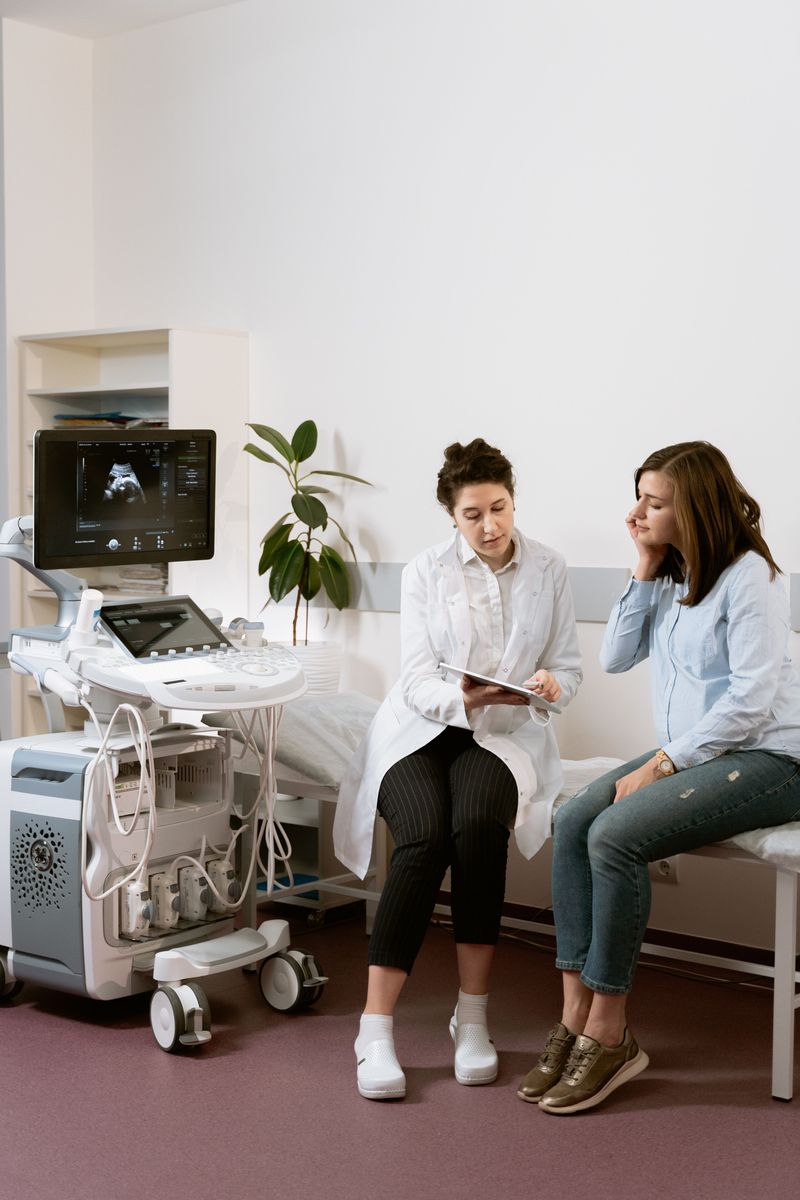
Why have an ultrasound of the neck vessels?
The most common conditions that lead to vascular problems.
Atherosclerosis of the neck vessels – the formation of atherosclerotic plaques and further narrowing of the vessel lumen; it develops when the vessel lumen is blocked by at least half or more, and until then the patient lives a normal life, unaware of the condition and not planning to see a doctor. Atherosclerotic plaques in the neck vessels are dangerous not only because of stenosis, which leads to chronic ischemia (oxygen deprivation) and impaired brain function, but also because fragments of the fat-and-protein masses (plaques) can break off, travel into smaller arteries and cause necrosis in the brain tissue (stroke). A plaque can break off, cause a local blood clot or dissection of the vessel wall.
Congenital or acquired anatomical anomalies of vessel structure — tortuosity, looping, aneurysmal changes, malformations, etc.
Osteochondrosis and herniated intervertebral discs, which compress the vessels from outside and narrow their lumens.
Tumors.
Angina (coronary heart disease (CHD)), atherosclerosis of the aorta and of the arteries of the legs require an ultrasound of the neck and head vessels, because atherosclerosis never affects just one vessel. But atherosclerosis of the neck vessels is dangerous because it is a source of a sudden "brain catastrophe", which often leads not only to severe disability but also to death.
IMPORTANT! An ultrasound of the neck vessels (in particular the vertebral arteries) is needed in osteochondrosis, because with this condition not only nerves can be pinched, but vessels can also be affected, which reduces the blood supply to the brain.
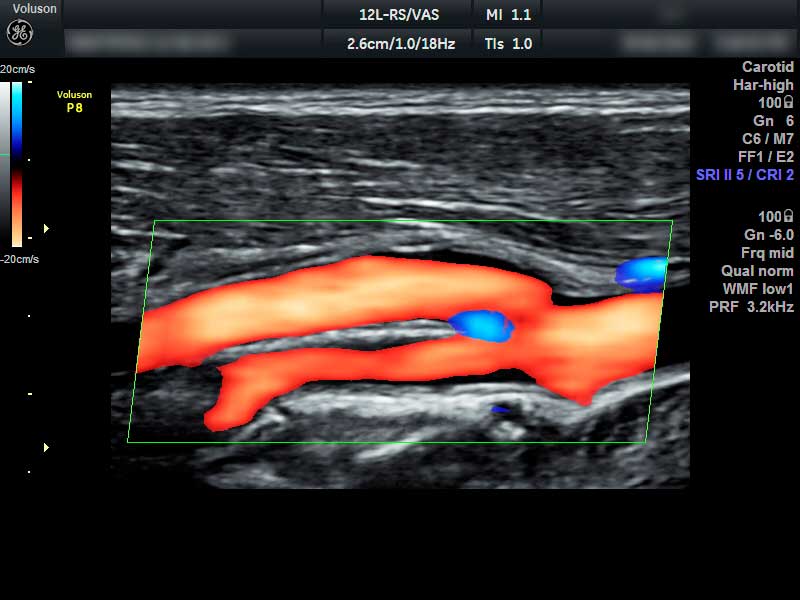
Indications for an ultrasound examination:
- History of stroke or heart attack.
- Pronounced neurological symptoms (impaired coordination of movement, dizziness, ringing in the ears, insomnia, darkening of vision, fainting, memory impairment).
- Weakness, increased fatigue, headache, "floaters" in the eyes.
- Aneurysms, stenoses, atherosclerosis of other arteries.
- Planned heart surgery.
- Thrombosis of veins or arteries.
- Coronary heart disease.
- Hypertension.
- Cervical osteochondrosis.
- Heart circulation disorders (including arrhythmias).
- Vegetative-vascular dystonia.
- High blood cholesterol levels.
- Past traumatic brain injuries.
- Sudden loss of vision.
- Reduced sensation in the face.
- Obesity.
- Smoking.